Economic Impact
The Loss of a Major Economic Engine
For decades, Golden Gate Fields generated millions of dollars in tax revenue that helped support schools, emergency services, infrastructure, libraries, and city operations in Albany and Berkeley. As the racetrack closes and the site transitions toward public ownership, both cities face the reality of losing a significant and long-standing source of revenue.
If the site becomes entirely tax-exempt open space, much of that revenue disappears. That reality should shape the conversation about what this site becomes and how it functions over time.
Supports preservation + adaptive reuse argument

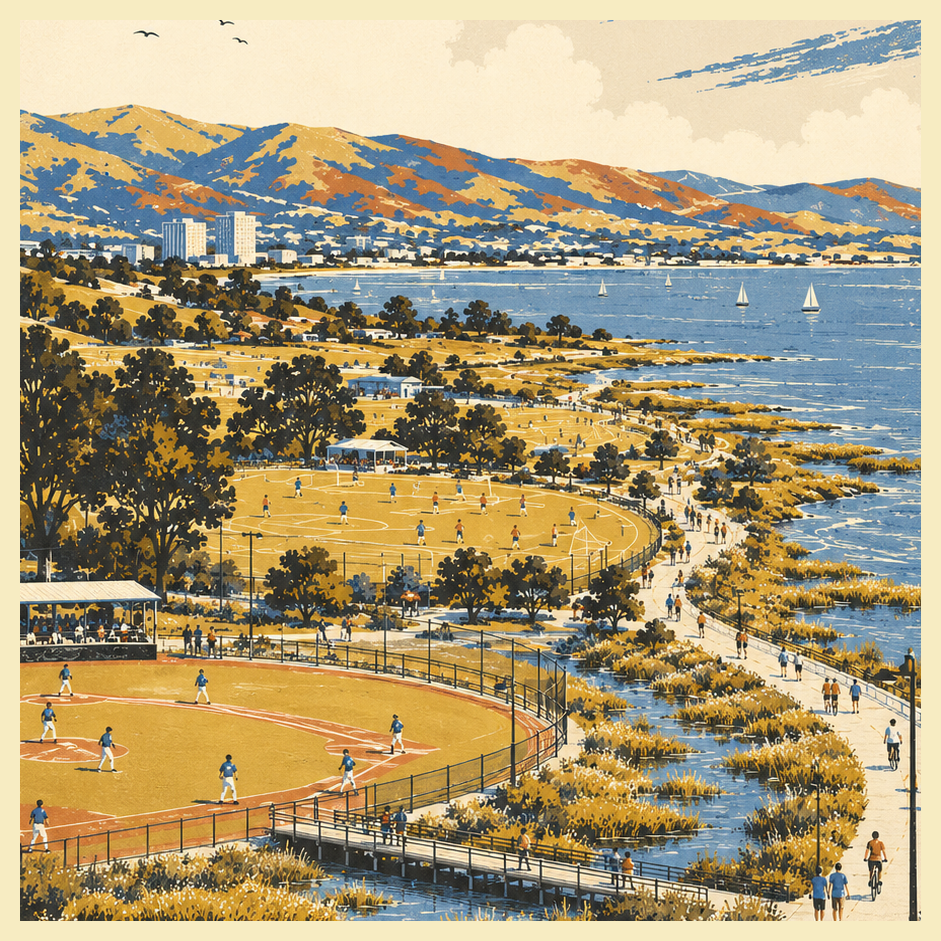
Too often, parks are conceived as singular spaces—either for recreation or for preservation. Golden Gate Fields offers the chance to move beyond that binary and create a mixed-use park that integrates regional-scale recreation, civic life, and a restored, adaptive shoreline and creek environment. It could also include a ferry connection, strengthening regional access and linking the site more directly to the broader Bay Area.
These elements are not in conflict. When brought together intentionally, they reinforce one another. A recreation-driven park generates consistent activity and economic value, which in turn can support long-term ecological investment—wetland restoration, shoreline adaptation, and ongoing maintenance. Without a reliable funding model, these ambitions are difficult to sustain. With one, they become achievable.
An Economic Engine
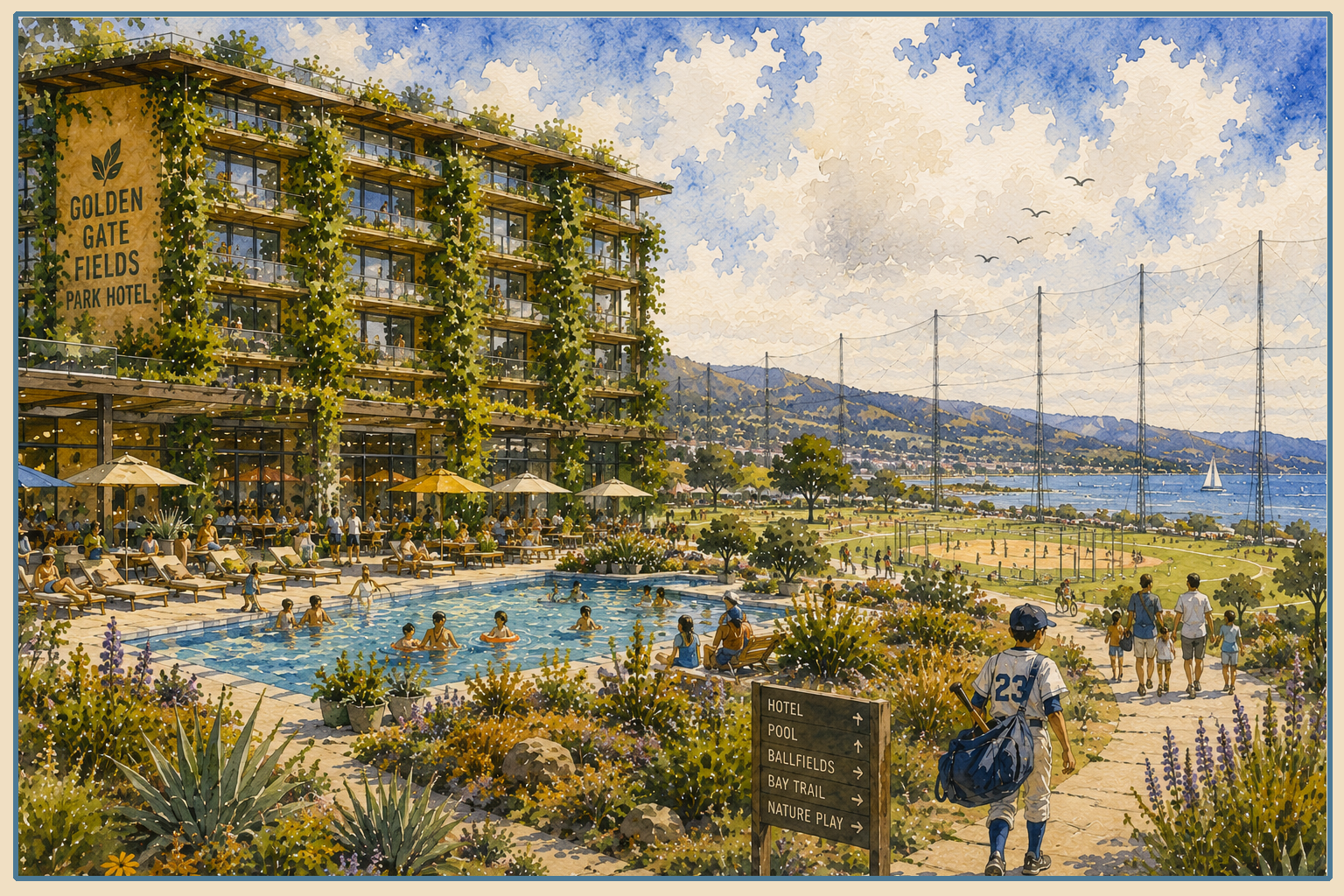
A carefully integrated hotel strategy is not separate from the larger vision for the site — it is part of what helps make the public landscape financially sustainable.
Hotels supporting tournaments, recreation, and waterfront activity can help offset the significant tax revenue lost with the closure of the racetrack while creating an ongoing funding source for maintenance, ecological stewardship, and public improvements.
The goal is not privatization. The goal is to strategically use limited development to support a much larger public benefit.