Why the Park
needs an
Economic Engine!
Acquiring Golden Gate Fields is only the beginning.
The future park will require substantial funding for design, construction, shoreline restoration, recreation facilities, programming, staffing, maintenance and long-term adaptation to sea-level rise. Acquisition funding does not pay for those needs.
Without a dependable source of ongoing revenue, we risk creating a park that is ambitious on paper but difficult to build, activate and maintain.
An economic engine does not mean privatizing the waterfront. It means using a small portion of the site strategically to help support the remaining public park for generations.
Public Land Can Support Public-Serving Partnerships
Public ownership and outside partnerships Public ownership and compatible private partnerships are not competing ideas. Across California and the Bay Area, parks use carefully structured ground leases and concession agreements to generate revenue that supports operations, maintenance, programming, and future improvements.
The Presidio offers one of the country's strongest examples. Today it combines parkland with hotels, restaurants, recreation facilities, offices, housing, museums, and event venues, all operating under long-term leases while the land remains publicly owned. In fiscal year 2025, the Presidio Trust generated approximately $230 million in earned revenue and reinvested approximately $58 million in net operating income back into the park. The Presidio is unique, but it demonstrates an important principle: thoughtfully integrated public-serving uses can provide the financial foundation for extraordinary public spaces.
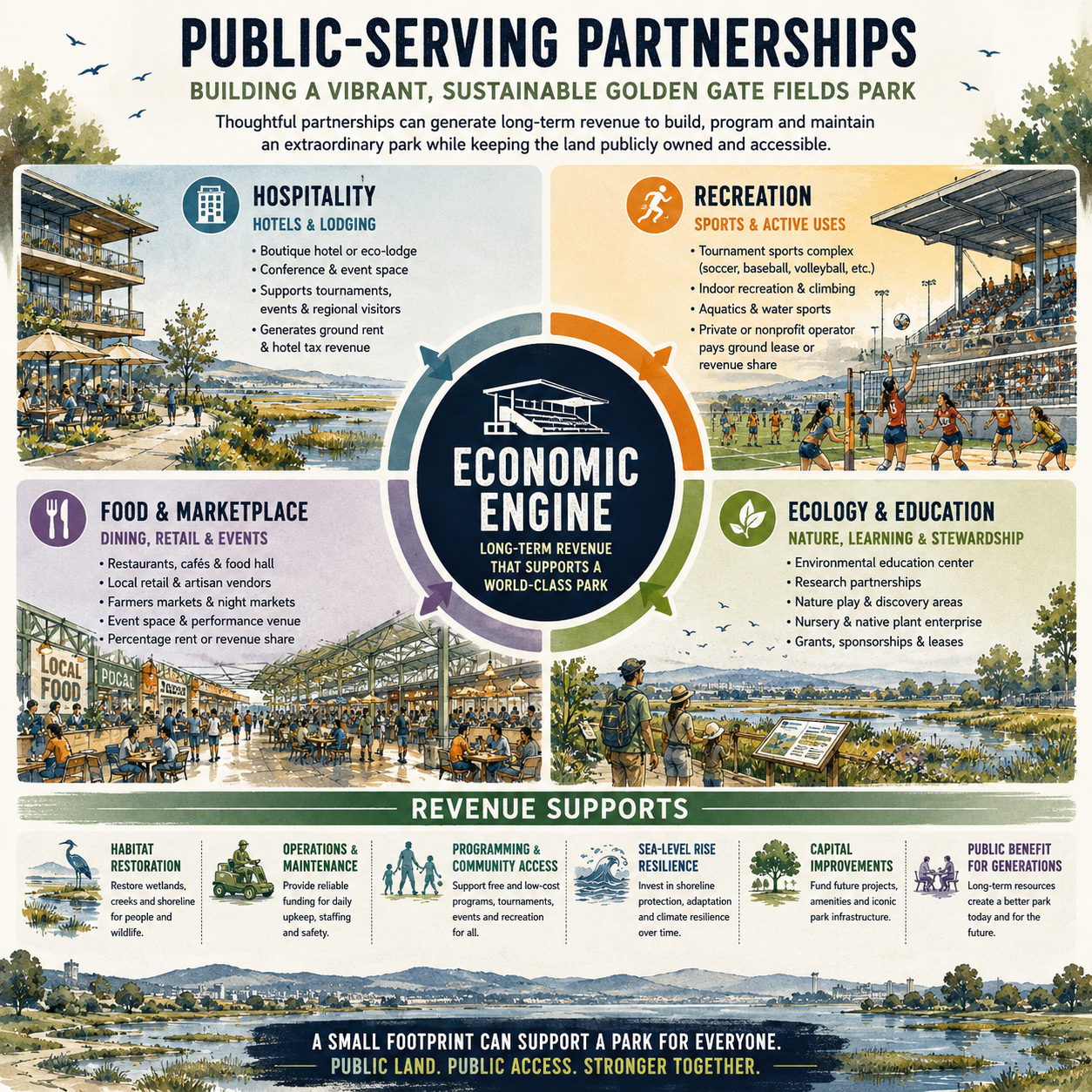
What Could an Economic Engine Look Like?
Golden Gate Fields has room to explore several compatible approaches without compromising public access or ecological restoration.
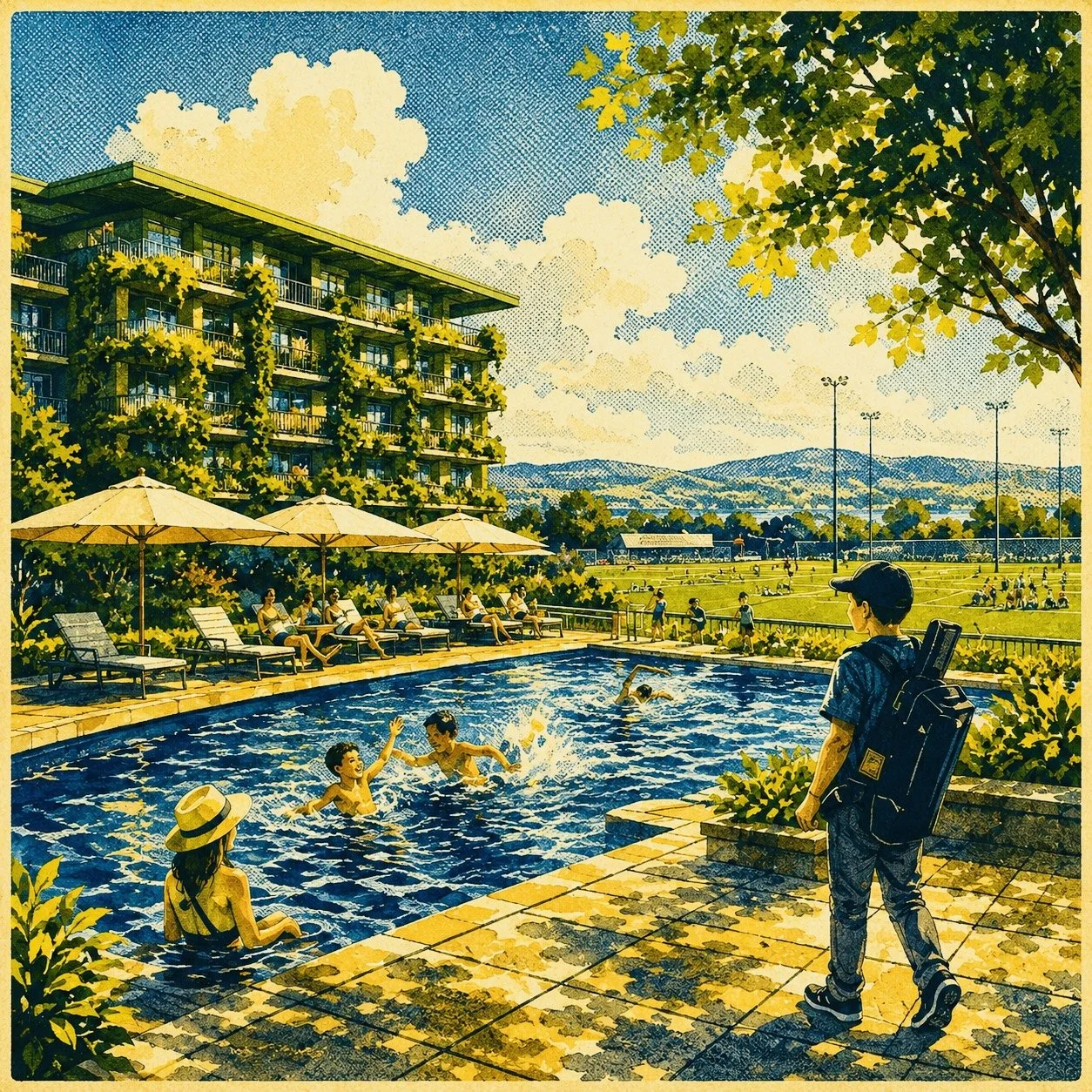
A Small Waterfront Hotel
A carefully located hotel occupying perhaps five acres could serve recreation tournaments, regional visitors and waterfront events while producing ground rent for the park and hotel-tax revenue for Albany or Berkeley.
For illustration, a 150-room hotel operating at 72% occupancy and an average room rate of $250 would generate almost $9.9 million in annual room revenue. The public benefit would depend on the final lease terms, but even a modest share through ground rent or percentage rent could support maintenance, programming and habitat restoration year after year.
The purpose would not be to turn the park into a resort. It would be to determine whether a small, carefully integrated use could help make the remaining 150-plus acres substantially better.
A Recreation and Tournament Campus
A privately or nonprofit-operated sports campus could include high-quality soccer, baseball, softball, volleyball or indoor recreation facilities. A long-term lease could require the operator to finance construction, maintain the facilities, provide community access and make annual payments to the park.
For illustration, eight fields rented for an average of 28 hours a week over 44 weeks at $175 an hour would produce approximately $1.7 million in annual field-rental revenue before tournaments, concessions, sponsorships or other income. The park would not necessarily receive all of that revenue, but a negotiated base rent and revenue-sharing agreement could create a meaningful annual funding stream.
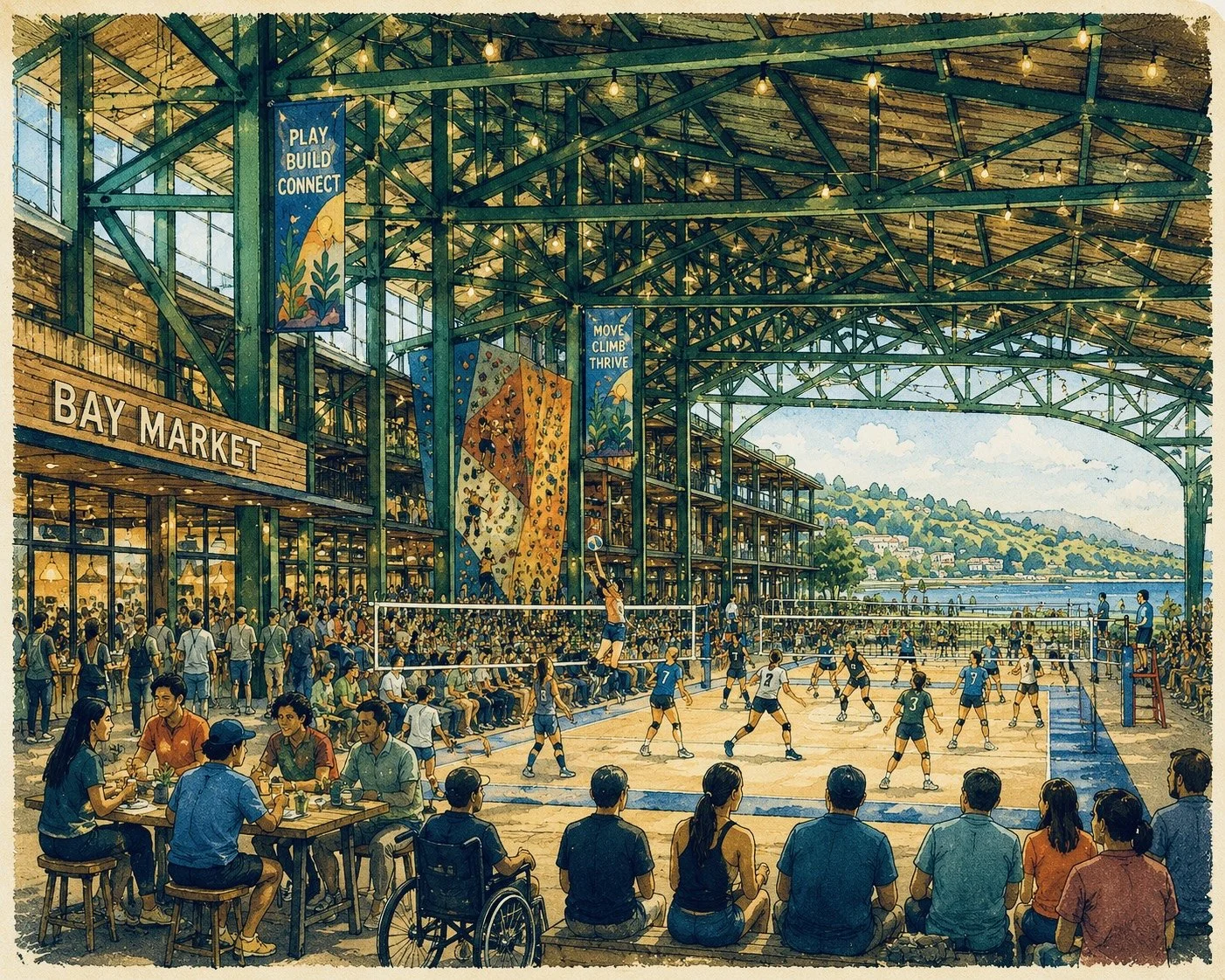
Marketplace, Food and Events
Parts of the grandstand or another reused structure could accommodate local food vendors, cafés, recreation providers, markets and event space.
An illustrative program of ten small tenants paying an average of $4,000 per month, combined with 40 annual events producing $5,000 each, would generate approximately $680,000 per year before operating costs. A well-structured agreement could dedicate a portion of that income directly to park programming and stewardship.
What Could This Mean for the Park?
A combination of leases, concessions and revenue-sharing agreements producing $1 million to $2 million annually would represent $30 million to $60 million over 30 years, even before accounting for inflation or rent escalation.
That could help fund:
Recreation and environmental programming
Maintenance and park staffing
Habitat restoration
Public restrooms and visitor facilities
Early phases of construction
Future shoreline-resilience projects
Free or reduced-cost community access
These figures are illustrative, not financial projections. Actual revenue would depend on market studies, environmental review, public priorities and negotiated lease terms. But they demonstrate why preserving flexibility matters.
A Small Footprint Could Support a Much Larger Park
The question should not be whether every acre becomes conventional parkland.
The better question is whether a small, carefully planned lease or partnership could help us build and sustain an extraordinary public park across the rest of the site.
Economic activity should serve the park—not overpower it. Any agreement should preserve public ownership, protect shoreline access, meet environmental standards and return clear value to the public.
Before irreversible decisions are made, we should study which recreation-serving uses, adaptive-reuse opportunities and long-term partnerships could provide the financial foundation the park will need.
A world-class park requires more than an inspiring design.